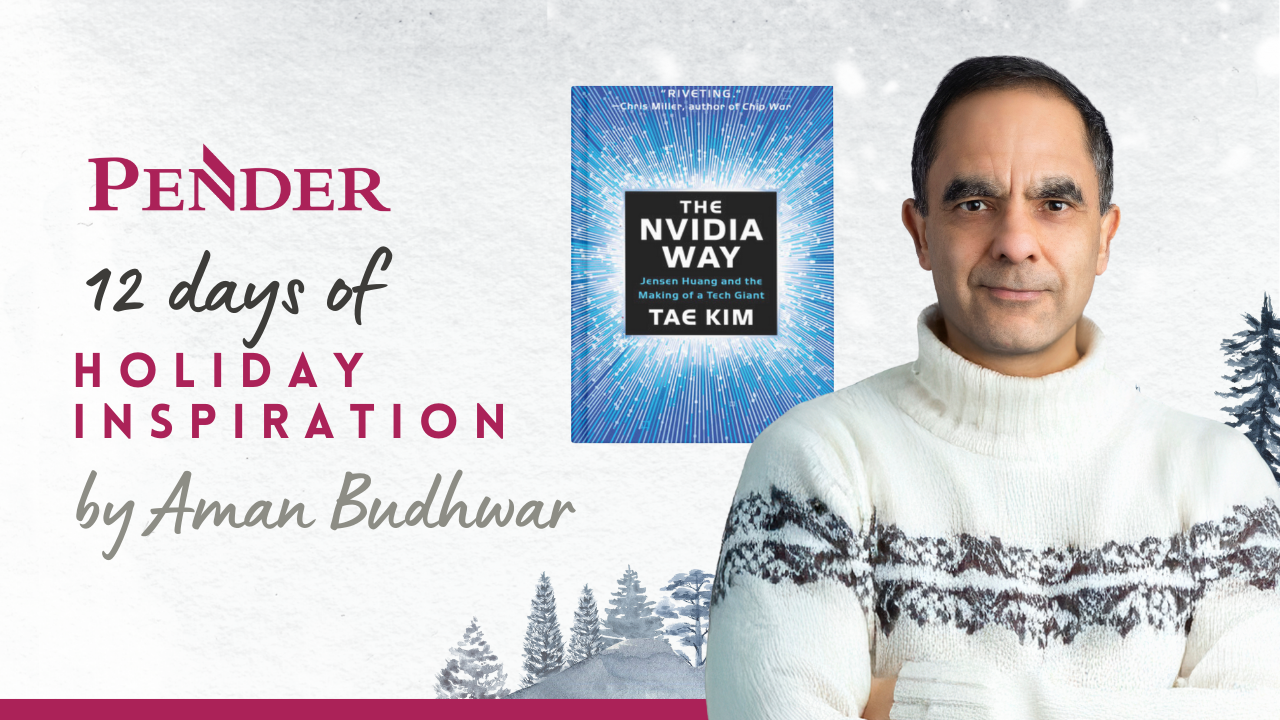
Aman Budhwar recommends
The Nvidia Way by Tae Kim
What is the book about?
The book provides a view into Nvidia's distinct culture and Jensen Huang's management principles that allowed it to create new markets and outmanoeuvre competitors, betting on the AI wave before anyone else.
Why do you recommend it?
Jensen Huang has served as the CEO of Nvidia since founding it in 1993, making him one of the longest serving CEOs, a feat all the more commendable in the hyper competitive technology industry. A combination of his technology background, foresight and business acumen has allowed Nvidia to dominate the Graphics Processing Unit (GPU) market, a critical input to the ongoing AI explosion.
“Ship the whole cow" involved creating low-tier products from rejected parts to compete on price, blocking competitors from entering the market”
Laura Baker recommends
All In by Billie Jean King

What is the book about?
All In is “An inspiring and intimate self-portrait of the champion of equality that encompasses her brilliant tennis career, unwavering activism, and an ongoing commitment to fairness and social justice. A story about the personal strength, immense growth, and undeniable greatness of one woman who fearlessly stood up to a culture trying to break her down.” – Serena Williams
In this autobiography, Billie Jean King (who is a very talented writer!) chronicles her legendary tennis career and lifelong fight for equality. She reflects on her victories, including the “Battle of the Sexes,” her role in major social movements, and her journey toward authenticity and activism for gender and LGBTQ+ rights.
Why do you recommend it?
I recommend All In because it’s far more than a sports memoir—it’s a masterclass in conviction, patience, systems thinking, and transformative leadership. Billie Jean King’s story demonstrates how lasting change is built through persistence and the ability to see opportunity where others see risk—lessons that resonate deeply for me in the worlds of investing, business, and social progress. As someone who once dreamed of a career in athletics and grew up inspired by trailblazers like her, I continue to see her as a powerful role model.
“Clyde, can you make me a champion? No, Billie Jean. But with hard work, you can.” — Billie Jean King”
Eric Wang recommends
Podcast: Capital Allocators hosted by Ted Seides

What is the podcast about?
A practitioner’s look at how great investors make decisions. The podcast consists of conversations with CIOs and investment leaders across hedge funds, mutual funds, endowments and pensions about how they allocate capital—covering portfolio construction, securities selection, risk, governance, and the craft of decision-making. The focus stays on decision quality rather than headlines.
Favourite episode: Michael Mauboussin - Pattern Recognition and Public Markets.
Why do you recommend it?
Each episode delivers portable decision frameworks I can use on direct investments: translating narratives into drivers, comparing my underwriting to what’s priced in, pre-mortems and risk control. It turns the “allocator’s toolkit” into practical takeaways - how Investment Committees set priorities, run due diligence, size positions, and evaluate opportunities - so you can sharpen your own process.
“Favourite Idea: Judge decisions by the quality of the process, not the outcome - start with base rates, write the thesis in expectations, and make sizing part of the process so behavior doesn’t undo the analysis”
Jacob Grainger recommends
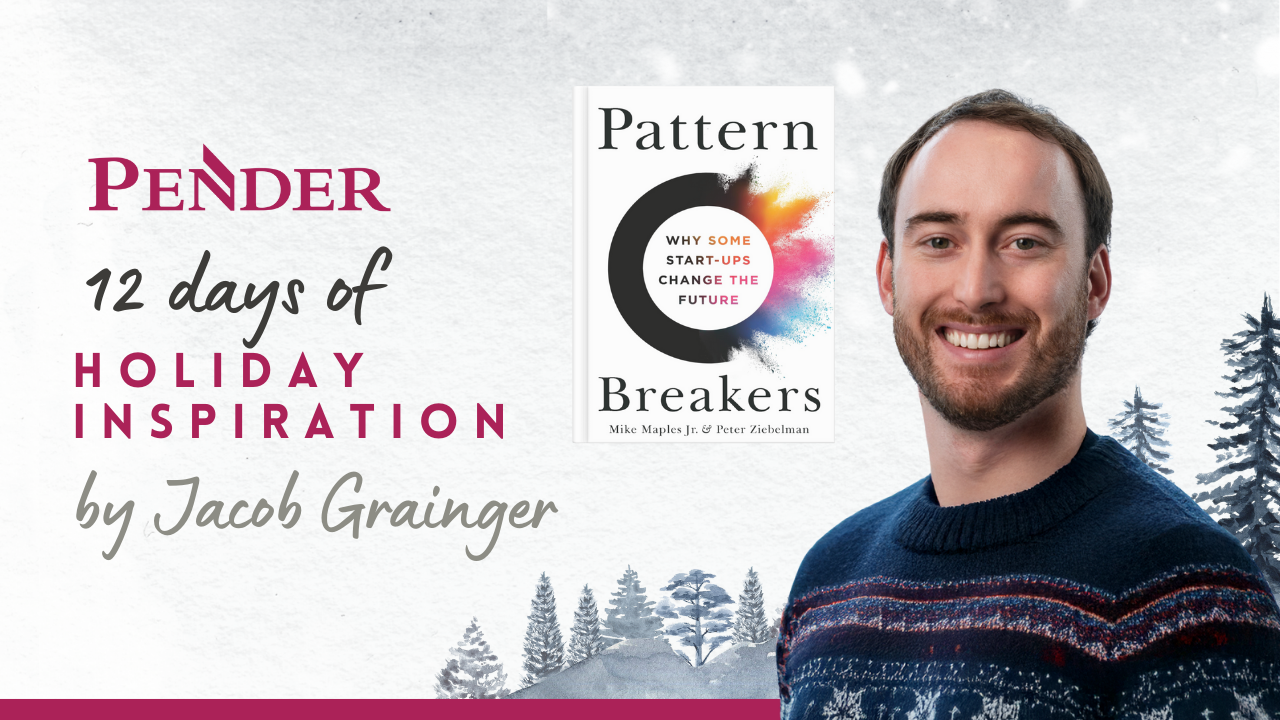
Pattern Breakers by Mike Maples Jr
What is the book about?
Pattern Breakers is a book about how truly exceptional startups are made. These founders break the underlying pattern of how things are done as Mike Maples has witnessed first hand several times during his tenure as an exceptional venture capitalist in Silicon Valley. These opportunities come up when founders find an inflection point in a market such as the internet or mobile and couple that with a unique, non-obvious insight into that market. These insights are found by living in the future.
Why do you recommend it?
A great book on what it takes to build a truly world changing company.
“An inflection point is a fundamental shift in the world that makes something newly possible that wasn't before. The best founders don't just ride these waves they spot them early.”
Ruben Gomez-Garcia recommends
Podcast: In Good Company hosted by Norges Bank Investment Management

What is the podcast about?
In Good Company is a podcast between Norges Bank Investment Management's CEO Nicolai Tangen and either CEO's of major companies or investment professionals. Topics typically explored include leadership approaches of operators, how they've built durable businesses for the long-term, among many other intricacies linked to the interviewee's company. My favourite episode thus far was the one with Stanley Druckenmiller which explored some of his lessons learned over his phenomenal investment career.
Why do you recommend it?
This is a great source for understanding the personas of world class operators and how they think, not only about operating their business but other important topics like managing people, navigating through challenging periods and points in their firms' history that were critical to the current business.
“The most important idea from it that cuts across the interviews is Nicolai's search for transparency and his willingness to ask tough questions to private sector leaders in search of the trust. This often provides unique insights on issues that these CEOs know much better than others outside the industry. It will certainly improve your ability to ask questions and obtain the answers you search for!”
Emily Wheeler recommends
The Price of Time: The Real Story of Interest by Edward Chancellor

What is the book about?
The book provides a history of interest from the time of the Mesopotamians who “charged interest on loans before they discovered how to put wheels on carts” to our current, post-Great Financial Crisis low-interest rate environment.
Why do you recommend it?
Interest is viewed as the time value of money or "The Price of Time” and given the significant impact through history of fluctuations here, the book is informative and also engaging. Ground covered includes the decades long low-interest rate environment in Japan, the tight money period during the time of Volcker in the US and our current low-interest rate environment. The impacts of these shifts are also discussed, which, in the current period, have included lower productivity growth, lower housing affordability and rising inequality.
“As much as the book gives a sage and stern account of the potential perils of certain interest rate policies, the following quote from the book provides some useful perspective: “Our earth is degenerate in these latter days: bribery and corruption are common; children no longer obey their parents; every man wants to write a book, and the end of the world is evidently approaching.” -Assyrian tablet, c. 2,800 BC”
Sharon Wang recommends
Breakneck: China's Quest to Engineer the Future by Dan Wang
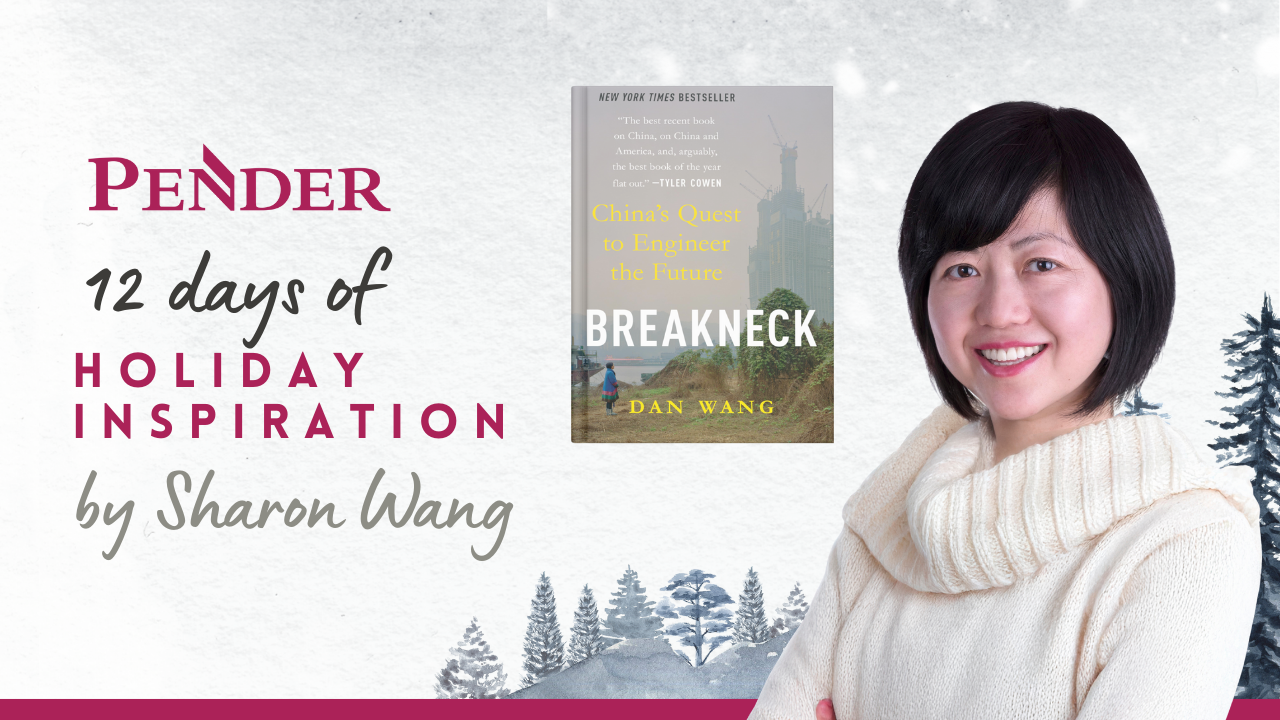
What is the book about?
In Breakneck, Dan Wang argues that modern China is best understood as an “engineering state” — one that builds, experiments, and scales at astonishing speed — while the United States has evolved into a “lawyerly society,” where process and regulation often slow progress. Drawing on years of on-the-ground experience, Wang weaves together policy analysis with personal stories to explain how these contrasting systems shape innovation and global competition.
Why do you recommend it?
I recommend Breakneck because it offers a fresh and insightful framework to understand the complex US–China dynamic—moving beyond the usual binaries of capitalism versus communism or free market versus state control. As the trade war between the two nations continues to unfold, the book sheds light not only on what each country is doing, but why they act the way they do. Wang’s analysis reveals how industrial policy, engineering culture, and governance priorities intersect to shape outcomes on both sides. If you’re an investor, or curious reader wanting to make sense of China’s scale, capability and contradictions—this book is a must read.
“A single line to capture the core argument of this book: “It’s time for a new lens to understand the two superpowers: China is an engineering state, building at breakneck speed, in contrast to the United States’ lawyerly society, blocking everything it can, good or bad.”
Tracy Tidy recommends
Invent & Wander: The Collected Writings of Jeff Bezos with an introduction by Walter Isaacson
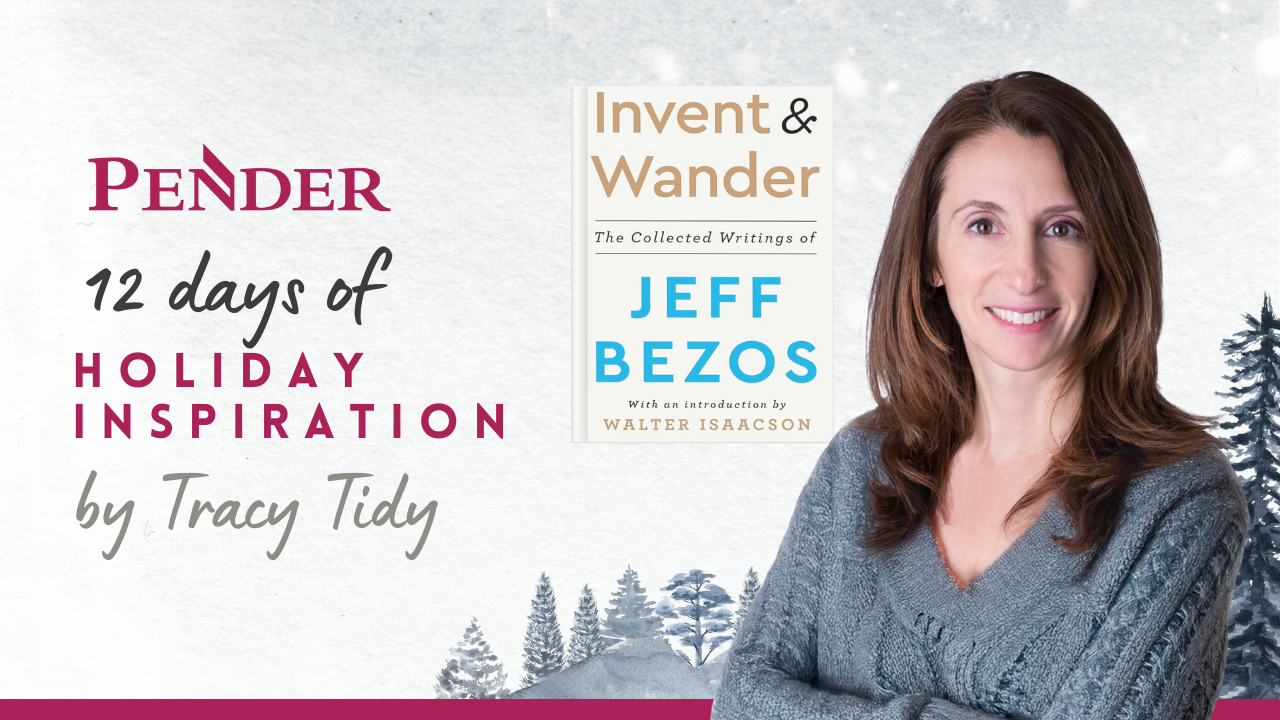
What is the book about?
This book is a curated collection of Jeff Bezos's writings, including his Amazon shareholder letters, public speeches and interviews. The book offers insights into Bezos's philosophy on innovation, leadership and long-term thinking, revealing how Amazon grew from a small online bookstore into one of the world's most transformative companies.
Why do you recommend it?
Beyond its corporate context, the book encourages readers in any discipline to adopt a mindset of curiosity, resilience and continuous learning. The central theme is that innovation thrives not from avoiding failure, but from embracing experimentation as a disciplined, ongoing process.
“If you double the number of experiments you do per year, you're going to double your inventiveness.”
Amar Pandya recommends
Titan: The Life of John D. Rockefeller Sr. by Ron Chernow
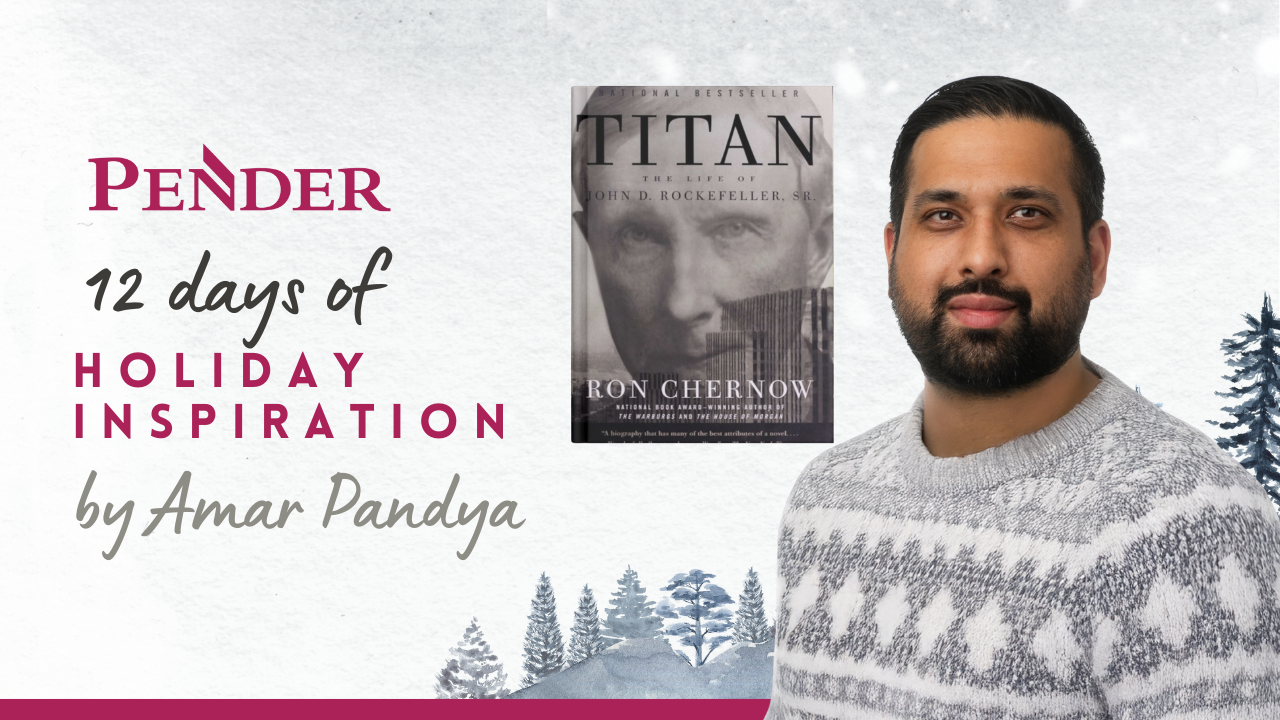
What is the book about?
Titan is a full-length biography on the life of John D. Rockefeller, Sr., the world's first billionaire and the creator of one of history most powerful and feared monopolies, Standard Oil.
Why do you recommend it?
With Elon Musk’s trillion-dollar pay package having been approved and the fortunes of the world’s AI titans continuing to soar, fears are mounting that the United States is drifting toward a new era of plutocracy, one dominated by the Magnificent Seven, whose growing power evokes the monopolies of the past like Standard Oil.
“I would rather earn 1% off a 100 people's efforts than 100% of my own efforts.” ― John D. Rockefeller”
Felix Narhi recommends
The Art of Spending Money - Simpler Choices for a Richer Life by Morgan Housel

What is the book about?
This book explores the idea that true wealth isn’t about how much money you have, but how intentionally you use it to create a meaningful life.
Why do you recommend it?
There are countless books on making money and investing wisely, yet surprisingly few on an equally important topic: how to spend money in a way that actually makes life better. Spending is universal no matter your wealth. Housel reminds us that personal finance is far more personal than finance. Money is less about spreadsheets and more about stories, especially the ones we tell ourselves. Good spending aligns with your true values rather than status or comparison, and the greatest thing money can buy is control over your time and your stress.
“Past a certain level of basic spending, every notch of higher lifestyle comes with social obligations, judgements by others, and shifts in your own expectation that are very real liabilities but easy to ignore.”
Everett Juurlink recommends
Eleven Rings: The Soul of Success by Phil Jackson

What is the book about?
Eleven Rings is about how legendary NBA coach Phil Jackson, who coached the Michael Jordan-era Bulls and the Kobe Bryant and Shaquille O'Neal Lakers, won a record 11 NBA titles while staying true to his values and his own style of coaching. Known as the "Zen Master", he shares stories about managing huge personalities like Michael Jordan, Scottie Pippen, Kobe Bryant, Shaquille O'Neal, and Dennis Rodman, and shows how ideas from his experience studying Buddhism and mindfulness, like being present and managing ego shaped the way he led and how he saw the game.
Why do you recommend it?
I recommend Eleven Rings because it gives an honest, behind-the-scenes look at how Phil Jackson got superstar teams to buy into something bigger than themselves, which feels very relevant to how any high-performing team works. I think others would enjoy it because it mixes great NBA stories about Jordan, Kobe, Shaq, as well as the Bulls and the Lakers dynasties with practical ideas about leadership, culture, and mindfulness that you can use in your own work.
“Mindfulness and being fully present helps players handle pressure and perform at their peak.”
David Barr recommends
10x is easier than 2x: How World-Class Entrepreneurs Achieve More by Doing Less by Dan Sullivan, Benjamin Hardy

What is the book about?
A book for Founders/CEOs on how to continually reinvent themselves and their company.
Why do you recommend it?
We are continuously assessing management teams and CEOs as part of our search for businesses that can achieve high compound growth rates over the long term. Understanding the principles of how CEOs build high growth companies helps us to identify those traits in the CEOs we look to invest in.